

Film score themes are more than just background music; they’re the secret sauce that elevates a movie from good to unforgettable. Picture this: a hero standing on a cliff, wind in their hair, while a sweeping orchestral score swells in the background. Suddenly, you’re not just watching a film; you’re experiencing an emotional rollercoaster.
Overview of Film Score Themes
Film score themes significantly enhance the emotional landscape of a movie. They consist of melodic motifs that evoke specific feelings and memories in audiences. Composers craft these themes to align with a film’s narrative, character arcs, and pivotal moments. For example, a heroic theme often utilizes strings and brass to signify bravery and triumph, while a melancholic theme may feature softer woodwinds to convey sadness.
Themes recur throughout a film, reinforcing connections between characters and their journeys. Notable composers, such as John Williams and Hans Zimmer, skillfully integrate themes into their scores, making them memorable. Williams’ works often employ leitmotifs that represent characters, while Zimmer blends orchestral and electronic elements to create unique soundscapes.
Themes contribute to the overall atmosphere of a film. In action scenes, driving rhythms and bold instrumentation enhance tension and urgency. Conversely, in romantic moments, gentle harmonies and lush arrangements can heighten emotional intimacy. The strategic use of themes helps guide viewers’ emotions, making the storyline more compelling.
Audiences may recognize iconic themes long after a film’s release. These themes can transcend the film’s context, becoming cultural touchstones. For instance, the “Imperial March” from Star Wars evokes a sense of villainy and power. Film score themes become integral to a film’s identity, connecting viewers to their memories and experiences associated with the story.
Historical Development of Film Score Themes
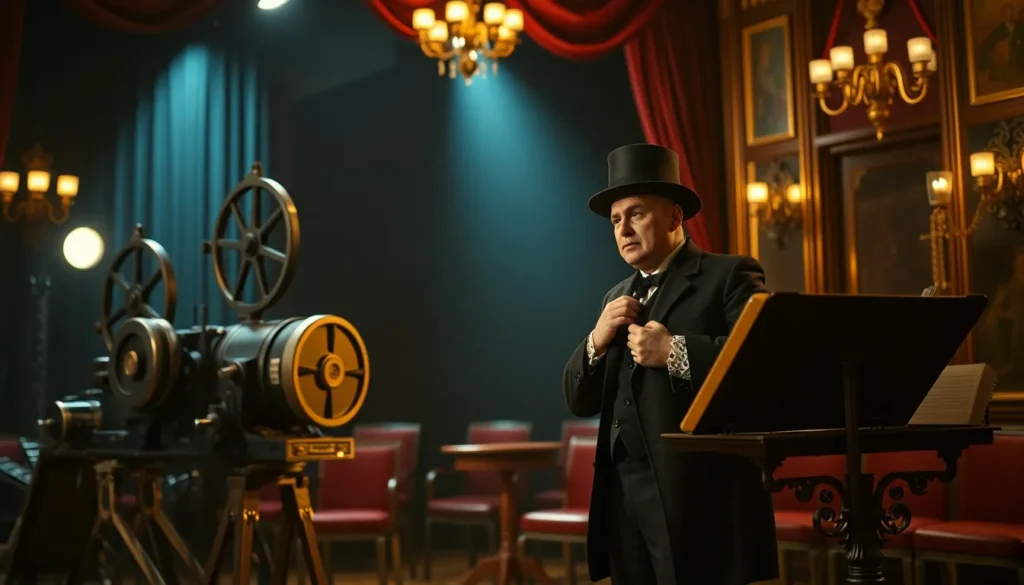
Film score themes have evolved significantly over time, with distinct eras marking advancements in musical composition. Each period introduced new techniques and styles that defined cinematic storytelling.
Early Cinema and Silent Films
In early cinema, music played a vital role in setting the mood. Restrained orchestras or single pianists usually accompanied silent films, creating an immediate emotional response. Pieces were often improvised, aligning with the on-screen action. Themes began surfacing as repetitive motifs, offering audiences recognizable auditory cues. The intention was to guide viewer responses, capitalizing on music’s universality. Noteworthy films, such as “The Birth of a Nation” (1915), showcased early thematic concepts that enhanced drama without dialogue.
The Golden Age of Hollywood
The Golden Age of Hollywood marked a significant shift in film score themes. From the late 1920s to the 1960s, composers like Max Steiner and Erich Wolfgang Korngold crafted intricate orchestral scores. These themes became more structured, serving as character motifs and emotional narratives. Iconic works emerged during this period, including Steiner’s score for “Gone with the Wind” (1939). Audiences began associating specific musical motifs with characters, enhancing engagement. This era established the groundwork for modern film scoring, emphasizing themes’ power in storytelling.
Elements of Film Score Themes
Film score themes encompass various musical components that enhance the emotional depth of a film. Two critical elements are melody and harmony, along with rhythm and texture.
Melody and Harmony
Melody serves as the foundation of a film score theme. It captures the essence of a character or scene, often creating memorable tunes that resonate with audiences. Composers craft melodies using specific intervals and motifs to evoke different emotions. Harmony complements melody, establishing the emotional landscape. Chords add richness and support the main themes, creating a fuller sound. For example, heroic themes often feature major chords, conveying victory and strength. In contrast, minor harmonies can evoke sadness or tension. Together, melody and harmony create a cohesive narrative, guiding viewers through the emotional journey of the film.
Rhythm and Texture
Rhythm shapes the pacing and energy of film scores. It influences how moments unfold on screen, often aligning with action or dialogue. Fast tempos can enhance excitement, while slower rhythms bring emotional weight. Textural elements also contribute significantly to the overall sound. Composers employ various instruments to create layers and depth. A full orchestral texture may evoke grandeur, while sparse arrangements can evoke intimacy. Different combinations of rhythm and texture deepen the emotional connection, enhancing the story’s impact. Thus, rhythm and texture work hand in hand with melody and harmony to create a rich auditory experience.
Iconic Film Score Themes
Film score themes consist of captivating melodies that resonate with audiences long after the credits roll. Iconic themes often define a film, enhancing storytelling through memorable music.
Classical Compositions
Classical film scores set a high standard for emotional impact. Max Steiner’s “Gone with the Wind” features lush orchestration, establishing a sweeping romantic atmosphere. Erich Wolfgang Korngold’s “The Adventures of Robin Hood” employs swashbuckling themes that energize action sequences. These composers introduce motifs that embody characters, creating instant recognition. Themes like Bernard Herrmann’s “Psycho” effectively invoke fear and suspense, showcasing the power of dissonance. Each composition illustrates the ability of orchestral music to shape narratives and connect viewers to the characters on screen.
Contemporary Works
Contemporary film scores often blend orchestral elements with electronic sounds. Hans Zimmer’s “Inception” employs pulsing rhythms and layered textures, evoking tension and excitement. John Williams’ “Harry Potter” series features signature motifs that enchant viewers and deepen emotional engagement. Additionally, composers like Junkie XL in “Mad Max: Fury Road” create driving beats that amplify the film’s chaotic energy. Each theme builds upon traditional foundations while integrating modern techniques. This fusion keeps film music relevant, ensuring that iconic themes continue to resonate with new generations of audiences.
Influence of Film Score Themes on Audience Emotion
Film score themes significantly influence audience emotions, enhancing cinematic experiences. These compositions evoke specific feelings, guiding viewers through the storyline. Emotionally charged moments often rely on thematic elements that resonate with personal memories. Composers craft melodic motifs designed to align with the film’s narrative, such as heroic themes that employ strings and brass to evoke bravery.
Melancholic themes commonly incorporate softer woodwinds, generating feelings of sadness. Recurring themes reinforce character connections, enhancing the emotional journey. In action scenes, suspenseful scores elevate tension, while romantic moments benefit from intimate melodies that create closeness.
Notable composers like John Williams and Hans Zimmer exemplify the integration of themes, crafting memorable scores that remain etched in the audience’s minds. Iconic themes transcend films, embedding themselves in culture. The “Imperial March” from Star Wars serves as a quintessential example, embodying villainy and power effectively.
Historical developments reveal the importance of scores in shaping emotional responses. Early cinema utilized simple motifs to guide viewer reactions, while Hollywood’s Golden Age introduced intricate orchestral scores that developed character-driven themes. This evolution emphasizes storytelling, engaging audiences through recognizable motifs.
Elements crucial to themes include melody, harmony, rhythm, and texture. Memorable tunes capture character essences, while harmonies establish emotional landscapes. Rhythmic variations affect pacing, and textures created by different instruments provide depth to scores.
Iconic film scores resonate with audiences, leaving lasting impressions after credits roll. Modern compositions maintain the emotional impact established by earlier works, ensuring themes remain relevant. Each theme builds upon a rich legacy, illustrating the ongoing evolution of film music and its vital role in connecting viewers to characters and narratives.
Film score themes play an essential role in shaping the cinematic experience. They evoke emotions and create lasting connections between viewers and the characters on screen. As themes evolve through time, they continue to resonate with audiences, reinforcing the power of music in storytelling. Iconic scores not only enhance the narrative but also become cultural landmarks, reminding viewers of the moments that stirred their hearts.
The artistry behind these themes reflects a deep understanding of human emotion and narrative structure. As film music progresses, it adapts to new techniques while honoring its rich history. This ongoing evolution ensures that film score themes will remain vital to the art of filmmaking, captivating audiences for generations to come.


